12 Jyotirlingas of Lord Shiva
Easy Guide — Names, Story, Timings & Best Time to Visit (2026 Update)
Introduction
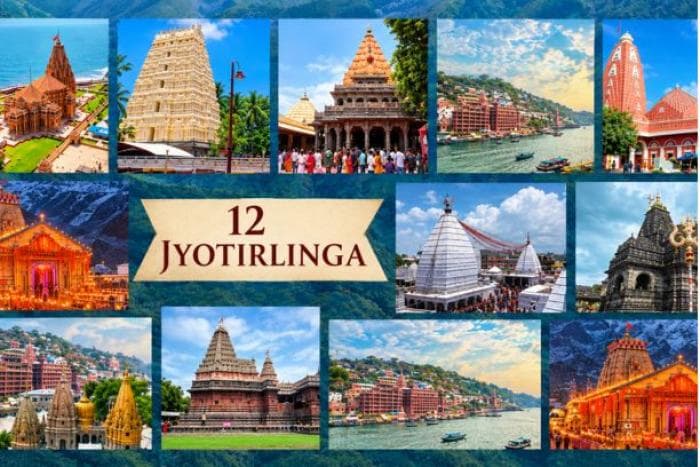
Lord Shiva has 12 special temples in India. Hindus call them the 12 Jyotirlingas.
"Jyoti" means light. "Linga" is a shape used to worship Shiva. So Jyotirlinga means "Shiva in the form of light."
Long ago, people believed there were 64 such light-temples. But only 12 of them became the most famous and most holy. Today, lakhs of people visit these 12 temples every year.
In this blog, you will learn:
- The name and place of all 12 Jyotirlingas
- The story behind each temple, in very easy words
- The best time to visit each one
- Temple opening and closing time
- What is new in 2026
- Simple tips to plan your trip
Read the full blog. By the end, you will know everything about the 12 Jyotirlingas — in the easiest way possible.
Quick List: All 12 Jyotirlingas
| No. | Name | Place | State | Best Time to Visit |
|---|---|---|---|---|
| 1 | Somnath | Prabhas Patan, Veraval | Gujarat | Oct to March |
| 2 | Mallikarjuna | Srisailam | Andhra Pradesh | Oct to Feb |
| 3 | Mahakaleshwar | Ujjain | Madhya Pradesh | Oct to March |
| 4 | Omkareshwar | Mandhata Island | Madhya Pradesh | Oct to March |
| 5 | Kedarnath | Rudraprayag | Uttarakhand | May-Jun, Sep-Oct |
| 6 | Bhimashankar | Bhorgiri, Pune | Maharashtra | Oct to Feb |
| 7 | Kashi Vishwanath | Varanasi | Uttar Pradesh | Oct to March |
| 8 | Trimbakeshwar | Nashik | Maharashtra | Oct to Feb |
| 9 | Vaidyanath | Deoghar | Jharkhand | Oct to March |
| 10 | Nageshwar | Near Dwarka | Gujarat | Oct to March |
| 11 | Rameshwaram | Rameswaram Island | Tamil Nadu | Oct to Feb |
| 12 | Grishneshwar | Near Ellora | Maharashtra | Oct to March |
These 12 temples are spread across 7 states of India. Maharashtra has the most — 5 temples, if we also count Parli Vaidyanath.
What Is a Jyotirlinga? (Simple Story)
Long ago, two gods — Brahma and Vishnu — had a big fight. Both said, "I am the biggest god."
To stop the fight, Shiva turned into a huge pillar of fire. This fire had no end — no top and no bottom.
Shiva said, "Whoever finds the end of this fire is the biggest god."
Vishnu went down to find the end but could not. He told the truth: "I could not find it."
Brahma went up to find the end. He also could not find it. But he lied and said, "I found it!"
Shiva knew Brahma was lying. So Shiva said, "Because you lied, no one will build temples for you." This is why we hardly see any Brahma temples in India today.
This story is why Shiva is worshipped as light — a Jyotirlinga.
Every Shiva temple has a linga (the shape used for worship). But a Jyotirlinga is special. People believe it did not come from a human hand — it appeared on its own. In Sanskrit, this is called "swayambhu," which means "made by itself."
Jyotirlinga vs Shakti Peeth — What Is the Difference?
People often mix up two words — Jyotirlinga and Shakti Peeth. They are not the same thing.
- Jyotirlinga = a place where Shiva appeared as light. There are 12 of them.
- Shakti Peeth = a place where a body part of Goddess Sati fell from the sky. There are 51 (some say 52 or 108).
Varanasi (Kashi) has both a Jyotirlinga and a Shakti Peeth in the same city. That is one reason Kashi is believed to be extra powerful.
The Famous Prayer (Stotram)
There is a small prayer with just 2 lines. It has all 12 names inside it. People say this prayer every Monday, and during Shravan month — the rainy season month that Shiva devotees love the most.
You do not need to learn this prayer in Sanskrit. Just remember the list of 12 names given above. That is enough for your trip.
All 12 Jyotirlingas — Story, Timing & Best Time to Visit
1. Somnath Jyotirlinga — Gujarat
The Moon God (Chandra) was cursed by his father-in-law. He lost his shine and glow.
Chandra prayed to Shiva at this place. Shiva removed the curse. That is why the moon now grows and shrinks every month, but never disappears forever.
To thank Shiva, Chandra built the very first Somnath temple, made of gold.
Fun fact: This temple was broken by attackers many times in history. But people rebuilt it again and again. That is why it is also called "the temple that never dies."
- Best time to visit: October to March
- Temple timings: Opens 6:00 AM, closes 10:00 PM. Prayers (aarti) happen at 7 AM, 12 PM, and 7 PM.
- Famous places nearby: Triveni Sangam (3 rivers meet here), Bhalka Tirth, Somnath Beach.
- 2026 update: In January 2026, India marked 1,000 years since the temple was first attacked. A 4-day event called "Somnath Swabhiman Parv" was held, and even the Prime Minister visited.
2. Mallikarjuna Jyotirlinga — Andhra Pradesh
Shiva's son, Kartikeya, got upset with his parents and left home. He went to stay on a hill called Srisailam.
Shiva and Parvati followed him quietly, just to make sure he was happy. They stayed there forever as Mallikarjuna (Shiva) and Bhramaramba (Parvati).
Special point: This is the only Jyotirlinga where both Shiva and Parvati are worshipped together in the same temple.
- Best time to visit: October to February
- Temple timings: Opens around 4:30 AM, closes by 10:00 PM.
- Famous places nearby: Srisailam Dam, Akkamahadevi Caves, Pathala Ganga (holy bathing spot).
3. Mahakaleshwar Jyotirlinga — Ujjain, Madhya Pradesh
This temple is special because the Shivling here faces south. South is the direction linked with death in Hindu belief.
That is why Shiva is called "Mahakal" here, which means the one who is bigger than time and death itself.
Famous ritual: Every morning, before sunrise, priests put sacred ash (bhasma) on the Shivling. This is called Bhasma Aarti. It happens only here, nowhere else in the world.
- Best time to visit: October to March
- Temple timings: Bhasma Aarti: 4-6 AM (pass needed) | Morning Aarti: 7-7:30 AM | Bhog Aarti: 10-10:30 AM | Evening Aarti: 5-5:30 PM | Night Aarti: 10:30-11 PM.
- Famous places nearby: Harsiddhi Temple, Ram Ghat, Kal Bhairav Temple.
- 2026 update: Booking is now fully online. You can book a Bhasma Aarti pass up to 90 days before your visit. There is also a fast "Tatkal" option 1 day before. Always book from the temple's official website only — never from an agent.
4. Omkareshwar Jyotirlinga — Madhya Pradesh
This temple sits on an island shaped like the holy symbol "Om" (ॐ).
Long ago, a mountain named Vindhya prayed to Shiva here for strength before a big battle. Shiva appeared as light to bless him.
- Best time to visit: October to March
- Temple timings: Opens 5:00 AM, closes 9:30 PM.
- Famous places nearby: Mamleshwar Temple, Ahilya Ghat, and the start point of the Narmada river walk (parikrama).
- Good to know: You can visit both Mahakaleshwar and Omkareshwar in just 2 days from Indore. They are only 140 km apart.
5. Kedarnath Jyotirlinga — Uttarakhand
After a big war (the Mahabharata), the Pandava brothers felt sad for all the killing. They wanted Shiva to forgive them.
Shiva did not want to meet them, so he turned into a bull and hid under the ground. Only his hump stayed on top. That hump is worshipped today.
Important: This is the hardest Jyotirlinga to reach. It sits very high up in the snow mountains, about 3,583 metres above sea level. The temple stays open for only 6 to 7 months every year.
- Best time to visit: May-June or September-October
- Temple timings: Opened on 22 April 2026 this year. Expected to close around 11 November 2026 (a festival day called Bhai Dooj). Always check the final closing date before you travel.
- Famous places nearby: Vasuki Tal (a glacier lake), Gandhi Sarovar.
- Good to know: You reach Kedarnath by a 16 km walk from a place called Gaurikund, or by helicopter. Helicopter seats finish fast, so book early.
6. Bhimashankar Jyotirlinga — Maharashtra
Shiva killed a demon named Tripurasura at this spot. After that, Shiva stayed here forever.
The temple sits inside green hills and thick forest, which makes it feel calm and peaceful.
- Best time to visit: October to February
- Temple timings: Opens around 4:30 AM, closes 9:30 PM.
- Famous places nearby: Bhimashankar Forest (home to a rare giant squirrel), Hanuman Lake.
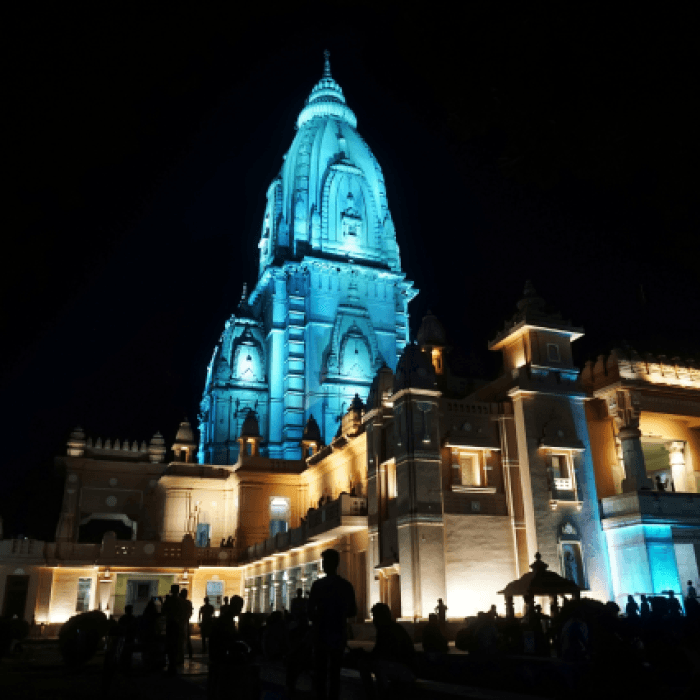
7. Kashi Vishwanath Jyotirlinga — Varanasi, Uttar Pradesh
Hindus believe Shiva lives in Varanasi forever. It is not just a temple he visits — the whole city is his permanent home.
People believe that if someone dies in Varanasi, they get moksha at once — that means they are freed from the cycle of life and death.
- Best time to visit: October to March
- Temple timings: Early prayer (Mangala Aarti): 3-4 AM | Morning look (Shringar Aarti): 6-7 AM | Normal darshan: 7 AM-12 PM | Lunch break (closed): 12-1 PM | Afternoon darshan: 1-7 PM | Evening prayer: 7-8 PM | Night prayer (last darshan): 9-10:30 PM. Best quiet time: 7-8 AM or 11 AM-12 PM.
- Famous places nearby: Dashashwamedh Ghat (famous evening Ganga Aarti), Sarnath.
- 2026 update: The temple now has a big, beautiful walking path called the "Kashi Vishwanath Corridor." It connects the temple straight to the Ganga river. During Shravan month (30 July to 28 August 2026), the temple was decorated in 4 special looks on 4 different Mondays. During Mahashivratri, online booking is usually closed for 2 days because so many people come — you may need to stand in a normal line instead.
- Good to know: Since Varanasi is a full holy city, most people also visit Ayodhya and Prayagraj on the same trip. Modern World Travel is based right in Varanasi and has ready-made packages for Kashi + Prayagraj + Ayodhya together.
8. Trimbakeshwar Jyotirlinga — Nashik, Maharashtra
This Shivling is special. It has 3 tiny faces inside it — Brahma, Vishnu, and Shiva together.
Years and years of pouring water on it (called abhishek) has made it look soft and worn out, like a smooth stone now.
- Best time to visit: October to February
- Temple timings: General darshan roughly 5:30 AM to 9:00 PM. Entry to the inner room is allowed only between 6-7 AM.
- Famous places nearby: Brahmagiri Hill (where the Godavari river begins), Anjaneri Fort.
- Good to know: Right now, only Hindu visitors are allowed inside this temple. To enter the inner room, visitors must wear wet cotton or silk cloth. Please check the latest rule with the temple before you travel, since rules can change.
9. Vaidyanath Jyotirlinga — Deoghar, Jharkhand
This is called the "healing" temple. Ravana once pleased Shiva so much that Shiva agreed to move to Lanka with him.
But the gods tricked Ravana into putting the Shivling down on the ground at Deoghar, and it got stuck there forever.
In another version of the story, Shiva became a doctor (called "Vaidya") to heal Ravana. That is why this temple is named Vaidyanath.
- Best time to visit: October to March
- Temple timings: Opens around 4:00 AM, closes 9:00 PM.
- Famous places nearby: Basukinath Temple, Trikuta Hills.
- Good to know: A temple in Parli, Maharashtra also says it is the real Vaidyanath. No one has ever proved which one is correct, so many devotees visit both over time.
10. Nageshwar Jyotirlinga — Near Dwarka, Gujarat
A demon locked up a Shiva devotee named Supriya in jail. Supriya kept chanting Shiva's name even while locked up.
Shiva heard him, came, and killed the demon. Shiva stayed there forever as Nageshwar — the protector from poison and evil.
- Best time to visit: October to March
- Temple timings: Opens 6:00 AM, closes 9:00 PM.
- Famous places nearby: Dwarkadhish Temple, Gomti Ghat.
- Good to know: Easy to visit along with Somnath and Dwarka city in one 3-day trip.
11. Rameshwaram Jyotirlinga — Tamil Nadu
Lord Rama worshipped Shiva here after defeating the demon king Ravana.
Even though Ravana was evil, he was also a learned Brahmin. So Rama prayed to Shiva here to clear this sin before moving forward.
Special point: This temple has the longest pillared walking path (corridor) of any Hindu temple in India.
- Best time to visit: October to February
- Temple timings: Opens 5:00 AM, closes for lunch break 1-3 PM, then closes for the day at 9:00 PM.
- Famous places nearby: Dhanushkodi (a quiet beach town at India's tip), Agni Tirtham.
- Good to know: Inside the temple, there are 22 holy wells. Pilgrims bathe in these wells before darshan — this happens only at this temple.
12. Grishneshwar Jyotirlinga — Near Ellora, Maharashtra
A woman named Kusuma prayed to Shiva every single day with full faith.
Her jealous co-wife killed Kusuma's son out of envy. But because of Kusuma's strong faith, Shiva brought her son back to life.
Shiva then stayed there forever as Grishneshwar, which means "Lord of Kindness."
- Best time to visit: October to March
- Temple timings: Opens 5:30 AM, closes 9:30 PM.
- Famous places nearby: Ellora Caves (a UNESCO World Heritage Site), Daulatabad Fort.
Fresh Updates for 2026-2027
| What's New |
|---|
| Kedarnath opened on 22 April 2026, and is expected to close around 11 November 2026. |
| Mahashivratri, Shiva's biggest festival, will fall on 6 March 2027. |
| Somnath temple celebrated 1,000 years of its history in January 2026, with a big national event. |
| Mahakaleshwar's Bhasma Aarti booking is now fully online, and can be booked up to 90 days early. |
| Kashi Vishwanath got 4 special decorated looks during the 4 Mondays of Shravan month in 2026. |
How to Plan Your Trip (Simple Groups)
You cannot easily visit all 12 temples in one trip. It can take 18 to 25 days, and it only works between May and October, because Kedarnath stays closed in winter.
It is much easier to visit them in small groups, like this:
- Group 1 (Maharashtra): Bhimashankar + Trimbakeshwar + Grishneshwar — 4 to 5 days
- Group 2 (Madhya Pradesh): Mahakaleshwar + Omkareshwar — 2 days
- Group 3 (Gujarat): Somnath + Nageshwar + Dwarka — 3 days
- Group 4 (Uttarakhand): Kedarnath alone — only from April to November
- Group 5 (Uttar Pradesh): Kashi Vishwanath + Ayodhya + Prayagraj — 3 to 4 days
- Group 6 (South India): Mallikarjuna + Rameshwaram — 4 to 5 days
Best overall time to visit most temples: October to March. Try to avoid July-August (Shravan month) if you don't like big crowds, since this is the busiest time of the year.
Frequently Asked Questions
Q1. How many Jyotirlingas are there?
There are 12 Jyotirlingas in total. They are spread across 7 different states of India.
Q2. Which is the first Jyotirlinga?
Somnath, in Gujarat, is counted as the first Jyotirlinga.
Q3. Which is the last Jyotirlinga?
Grishneshwar, near Ellora in Maharashtra, is the twelfth and last one on the list.
Q4. Is Kashi Vishwanath one of the 12 Jyotirlingas?
Yes. Kashi Vishwanath in Varanasi is the 7th Jyotirlinga on the traditional list.
Q5. Can I visit all 12 Jyotirlingas in one trip?
It is very hard. It takes about 18 to 25 days and only works well between May and October. Most people visit them in small groups, spread across a few years.
Q6. What is the difference between a Jyotirlinga and a Shakti Peeth?
A Jyotirlinga is a place where Shiva appeared as light — there are 12. A Shakti Peeth is a place where a part of Goddess Sati's body fell — there are 51 to 108, depending on belief.
Q7. Why are there 2 temples for Vaidyanath, and 2 for Nageshwar?
The old prayer (stotram) does not give one exact city name for these two temples. So more than one place claims to be the real one, and no one has ever proved which is correct.
Q8. Which Jyotirlinga is the hardest to visit?
Kedarnath. It sits very high up in the snow mountains and stays closed for about 6 months every winter.
Q9. What is Bhasma Aarti?
It is a special early morning prayer where sacred ash is placed on the Shivling. It happens only at the Mahakaleshwar temple in Ujjain, nowhere else.
Q10. Can anyone enter every Jyotirlinga temple?
Mostly, yes. But a few temples, like Trimbakeshwar, currently allow entry only to Hindu visitors. It is best to check the temple's rule before you plan your visit.
Ready to Start Your Jyotirlinga Journey?
Now you know the full story of all 12 Jyotirlingas, in the easiest way possible. Whether you want to start with Kashi Vishwanath, or plan a full circuit step by step, the right timing and the right order will make your trip smooth and peaceful.
If you want to start your journey from Kashi Vishwanath, Modern World Travel is based right in Varanasi. We can help you plan your temple visits and timings, and connect it with Ayodhya and Prayagraj — all in one easy, well-planned trip.