
Cave Paintings Near Varanasi: A Journey Back 4,000 Years


Discover 4,000-year-old cave paintings near Varanasi. A travel guide to their history, location and how to plan a day trip from the city.
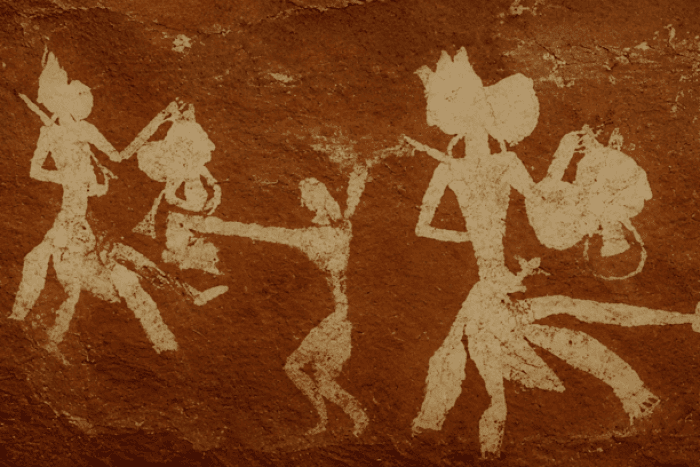
Just a short drive from Varanasi, hidden inside the forested hills of Sonbhadra, lies a piece of history that most travellers never even hear about. Long before temples, forts, or palaces were built in this region, early humans were already leaving their mark on rock walls — paintings of hunts, dances, animals, and everyday life. These cave paintings, some almost 4,000 years old, make Sonbhadra one of the most important rock art hubs in all of North India.
For anyone visiting Varanasi who wants to see something completely different from the usual ghats and temples, these ancient painted caves offer a rare look into how people lived thousands of years ago, long before recorded history began.
Where These Ancient Paintings Are Found
Sonbhadra district sits within the Vindhya and Kaimur hill ranges, an area that turns out to be one of the richest rock art zones in the country. In fact, this stretch of hills has around 250 rock shelters with paintings, spread across Sonbhadra, Mirzapur, Chandauli, Allahabad, and Rewa.
Some of the most well-known sites in Sonbhadra include the Lakhania caves, located in the Kaimur ranges about 22 km from Robertsganj. These caves are especially famous for their beautifully preserved rock paintings, believed to be close to 4,000 years old. Another important site is Khodwa Pahar, also called Ghoramangar, along with the Panchmukhi rock shelters (just 8 km from Robertsganj), the Kauwa Khoh rock shelters near Churk, and the Lakhma caves near Baghma village.
Most of this art belongs to a huge stretch of time, ranging from the Mesolithic age all the way through to the Chalcolithic age, meaning some of these paintings were made well before people even started working with metal tools.
What the Paintings Actually Show
Walking through these rock shelters feels a bit like flipping through a very old photo album, except the photos are painted directly onto stone. The artwork mostly shows scenes from daily life at the time — people hunting animals, groups going to war, community festivals, dancing, and even romantic moments between couples. Animals appear often too, a sign of how closely early communities lived alongside the wildlife around them.
These aren't just random doodles. They give a real window into the culture and beliefs of the people who lived here long ago. Many of the tribal communities still living in the hills of Sonbhadra today, including the Gond, Chero, Buksa, Jaunsari, Kharwar, Pankha, and Patari tribes, are believed to carry forward traditions connected to this same ancient way of life.
Interestingly, most of these rock art caves were first discovered and documented in the 19th century by a British archaeologist named Archibald Carlleyle. His work helped bring global attention to this region, and even today, archaeologists continue to refer to Sonbhadra as the "rock art hub of Uttar Pradesh."
A Nearby Stop Worth Adding: Sampurnanand Sanskrit University
While you're exploring this side of Uttar Pradesh's history, it's worth mentioning another place tied to preserving old knowledge, though from a very different era. Sampurnanand Sanskrit University, located in Varanasi, has played a major role in keeping the Sanskrit language alive through translation, publishing old texts, and cataloguing rare manuscripts. It has also helped train scholars who understand both traditional Sanskrit knowledge and modern academic thinking.
While this isn't a rock art site, it fits nicely into a trip built around exploring how history and knowledge have been preserved in this part of India, from ancient cave walls to ancient manuscripts.
Why This Makes a Great Addition to Your Varanasi Trip
Varanasi is usually associated with the Ganga, its ghats, and its temples, and rightly so. But just a short distance away, Sonbhadra offers a completely different kind of history, one that goes back thousands of years before any of the city's famous landmarks existed. Seeing these cave paintings up close gives travellers a rare chance to connect with the very beginnings of human life and culture in this region.
These sites are quiet, less crowded, and full of stories written in stone rather than books. For travellers who enjoy history, art, or simply exploring places most people skip, a visit to the Lakhania caves or the Panchmukhi rock shelters can turn into one of the most memorable parts of a Uttar Pradesh trip.
Plan Your Visit with Modern World Travel
Reaching these lesser-known rock art sites is much easier with the right planning. At Modern World Travel, we help travellers explore the quieter, more offbeat corners of Uttar Pradesh, not just the famous stops. Whether it's arranging transport from Varanasi to Sonbhadra or building a route that combines the cave paintings with nearby forts and nature spots, we take care of the details so you can focus on the experience.
If ancient history sounds like the kind of detour you'd enjoy, get in touch with us and we'll help you plan it.
FAQs
1. How old are the cave paintings found near Varanasi?
The paintings found in Sonbhadra's caves, especially at Lakhania, are believed to be around 4,000 years old, dating back to the Mesolithic and Chalcolithic ages.
2. Where exactly are these cave paintings located?
They're spread across the Vindhya and Kaimur hill ranges in Sonbhadra district, with key sites like Lakhania caves, Panchmukhi rock shelters, Kauwa Khoh, and Lakhma caves.
3. Who discovered these rock art sites?
Most of the rock art caves in this region were first discovered and documented by British archaeologist Archibald Carlleyle in the 19th century.
4. What do the cave paintings actually show?
The paintings mostly depict scenes of hunting, war, festivals, dancing, romantic life, and animals, giving a glimpse into the daily life and beliefs of early communities.
5. How far is Sonbhadra from Varanasi, and can it be a day trip?
Sonbhadra is about 100–120 km from Varanasi, and yes, sites like the Lakhania caves can be covered in a single-day trip if you start early.
Related Itineraries
 1 Night / 2 Days
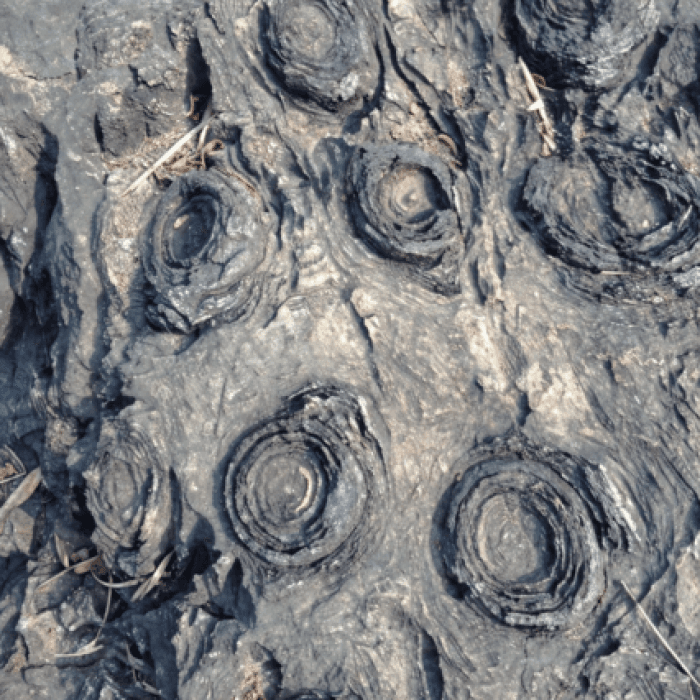
<p>Here's a tour for the genuinely curious — one that reaches back not centuries but hundreds of millions of years. Set in the Sonbhadra region in the far south of Uttar Pradesh, this trip pairs the astonishing Salkhan Fossil Park with the area's historic hill forts, combining deep natural history with heritage and some gorgeous, little-visited countryside along the way.</p><p>The star attraction is the Salkhan Fossil Park, one of the oldest and most remarkable fossil sites in the world. The rocks here preserve fossilised stromatolites — the traces of some of the earliest life on Earth — dating back well over a billion years, far older than the famous fossil parks many people have heard of. Walking among these ancient, patterned rocks, with a guide to explain what you're seeing, is a genuinely mind-expanding experience; it's the kind of place that quietly rearranges your sense of time. Despite its global significance, it remains wonderfully off the tourist trail.</p><p>The tour balances this deep-time wonder with the region's human history in the form of its old hill forts. Sonbhadra and its surroundings are dotted with atmospheric forts such as Agori and Vijaygarh, perched above rivers and forest, their weathered walls and gateways telling stories of the dynasties that once held this strategic frontier country. Exploring them, often with hardly another visitor in sight, has a real sense of discovery, and the views from the ramparts over the surrounding hills and valleys are superb.</p><p>Between the fossils and the forts, the landscape itself is a quiet joy — a scenic corner of Uttar Pradesh of forested hills, rivers and rural life that very few travellers ever see. It's a refreshing antidote to the well-worn tourist routes, and a brilliant trip for families with inquisitive children, geology and history enthusiasts, and anyone who likes their travel with a side of genuine fascination.</p><p>Because this is an offbeat destination, having everything well organised makes all the difference, and that's exactly what we provide. The region is reached by road from Varanasi or the nearby railheads, and can be combined with the neighbouring Sonbhadra nature circuit for a fuller exploration of this intriguing area.</p><p>We take care of all the arrangements — comfortable accommodation suited to the area, a clean AC vehicle with an experienced driver who knows these rural roads, knowledgeable local guiding at the fossil park and the forts, and all transfers — so you can concentrate on the wonder of it all. Share your preferred dates and group size, and we'll put together a Salkhan Fossils & Forts tour tailored to you and send across a personalised quote, for a journey quite unlike any other in the region.</p>
 1 Night / 2 Days
<p>Tucked into the southern tip of Uttar Pradesh, where the state meets Madhya Pradesh, Chhattisgarh, Jharkhand and Bihar, Sonbhadra is one of India's best-kept travel secrets — a scenic land of forested hills, tumbling waterfalls, rivers, dams and historic forts. This tour is a relaxed exploration of that natural beauty and heritage, perfect for travellers who love landscapes, the outdoors and places well away from the crowds.</p><p>Nature is the heart of the trip. Sonbhadra's hills and forests are laced with waterfalls that are at their most spectacular after the monsoon — spots like Mukkha Falls and other hidden cascades tumble through green, rocky country that feels a world away from the plains. The region is also shaped by its great rivers and reservoirs, including the vast Rihand Dam, whose wide waters and surrounding hills make for beautiful, peaceful scenery. There are viewpoints, forested drives and quiet corners aplenty for anyone who simply loves to be out in nature.</p><p>The tour balances this with Sonbhadra's human heritage, in the form of its old hill forts. Atmospheric strongholds such as Agori and Vijaygarh, standing above rivers and forest, speak of the dynasties that once controlled this strategic border country. Weathered and romantic, often with scarcely another soul around, they reward a little exploration with a strong sense of history and sweeping views over the surrounding landscape.</p><p>What makes Sonbhadra so appealing is precisely how undiscovered it is. This is not a packaged, crowded destination; it's a genuine escape into a scenic, culturally interesting corner of India that most travellers never reach. That means a real sense of adventure and discovery, but it also means good planning matters — knowing where to go, when, and how to get the best of the area — which is where we come in.</p><p>The region is reached by road from Varanasi, which makes it a natural add-on for travellers already visiting Kashi who want to venture somewhere completely different. It pairs especially well with the Salkhan Fossil Park nearby, for a trip that combines waterfalls, forts and the wonder of billion-year-old fossils. The best time to visit for waterfalls and greenery is after the rains, when the whole landscape comes alive.</p><p>We arrange the entire trip so you can relax and enjoy the scenery — comfortable accommodation suited to the area, a clean AC vehicle with an experienced driver familiar with these rural roads, local guiding at the forts and natural sites, and all transfers — taking the uncertainty out of an offbeat destination. Just share your preferred dates and group size, and we'll craft a Sonbhadra Nature & Forts tour tailored to you and send across a personalised quote, for a refreshing, off-the-beaten-path escape in southern Uttar Pradesh.</p>