


Varanasi Flood Update September 2026: Is It Safe to Visit Varanasi in Monsoon?
Last Updated: 16 September 2026
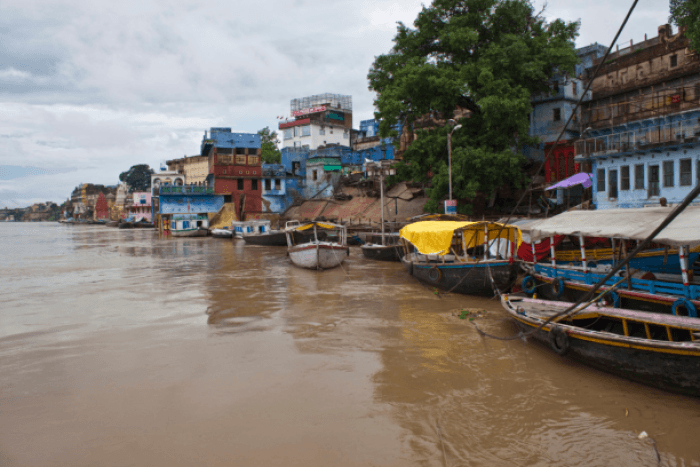
Quick Answer: Yes, you can still visit Varanasi during the monsoon flood — but your trip will look different. The Ganga water level in Varanasi has risen above the danger mark this season, most ghats are underwater, and boat rides are suspended. However, Kashi Vishwanath Temple, Sarnath, Ramnagar Fort and most city temples are open and safe. Ganga Aarti is still performed daily, just from a higher spot. If your trip is flexible, October to March is far better.
Every year, when the monsoon rains fall over North India, the Ganga river in Varanasi begins to rise. Some years the water stays low. Some years it climbs over the stone steps and covers the ghats completely. The year 2026 has been one of the bigger flood years.
If you have a trip planned, you are probably worried. You may be asking: Are the ghats open? Can I take a boat ride? Will I still see the Ganga Aarti? Should I cancel? This guide answers all of it in simple words, with the real numbers.
Planning a Varanasi trip and not sure about the flood? Talk to the Modern World Travel team — we track the ghat situation daily and adjust your plan for free.
Varanasi Flood Update: What Is Happening Right Now
This monsoon season, the Ganga rose sharply in Varanasi. In early September 2026, the river crossed the warning level and the district administration stopped all boat operations. Over the following days the water kept climbing — at one point rising by about 2 centimetres every hour — until it went past the danger mark and submerged all of the city's famous ghats.
At its peak, the river reached roughly 72 metres. The connecting walkways between the ghats went completely underwater, cutting the normal path that tourists use to walk from one ghat to the next. More than 6,500 residents from low-lying areas were moved to relief camps. The nearby Varuna river also overflowed, which flooded several neighbourhoods away from the main riverfront.
Already booked your dates? Send us your itinerary and we will tell you honestly what is possible this week.
As of mid-September, the water level has started dropping and has fallen back below the danger mark. This is good news. But the recovery is slow. Around 84 ghats are still under water, boat operations remain suspended, and small temples in low areas are still submerged. Officials say it will take some more time before things return to normal.
This is important to understand: the water going down is not the same as the ghats being usable. After a flood, thick river silt is left behind on every step. That silt has to be cleared before people can walk safely. This cleaning work usually takes one to three weeks after the water fully recedes.
Ganga Water Level in Varanasi: What the Numbers Mean
The Central Water Commission measures the Ganga at the Rajghat gauge in Varanasi. Three numbers matter. Once you know them, you can check any news report yourself and understand exactly how serious the situation is.
| Level | Height | What It Means |
|---|---|---|
| Warning Level | 70.262 metres | River is getting high. Boats usually stopped. Lower ghats start going under. |
| Danger Level | 71.262 metres | Flood situation. All ghats submerged. Relief work begins. |
| Highest Flood Level | 73.90 metres | The highest ever officially recorded mark for Varanasi. |
Want to know the ghat status for your exact travel dates? WhatsApp us and we will check before you book anything.
Here is a simple way to think about it. Below 70 metres, Varanasi feels close to normal. Between 70 and 71.26 metres, boats stop and the lower steps disappear. Above 71.26 metres, the riverfront as tourists know it is gone — the water reaches the buildings, temples and guest houses that sit along the ghats.
One thing surprises many visitors. The Ganga in Varanasi can keep rising even when it is not raining in Varanasi at all. That is because the water is coming from far upstream — from the mountains and from the rivers that join the Ganga hundreds of kilometres away. So a sunny day in Varanasi does not mean the river is safe.
Which Varanasi Ghats Get Submerged First?
Varanasi has around 84 ghats along a stretch of about 7 kilometres. They are not all at the same height, so they do not flood at the same time.
The lower ghats go under first. Manikarnika Ghat and Harishchandra Ghat — the two cremation ghats — are among the earliest affected. When water reaches them, the cremation rituals do not stop. They are simply shifted to the upper steps and to the rooftops of nearby buildings. This has happened more than once this season. It is a striking sight, and it shows how the city continues its oldest traditions no matter what the river does.
Visiting for a specific ritual or ceremony? Our Varanasi team knows which ghats are usable and can arrange a priest at an alternative location.
Dashashwamedh Ghat, where the famous evening Ganga Aarti takes place, sits a little higher. It still floods in a big year, but later than the cremation ghats. Assi Ghat, at the southern end, and Namo Ghat, the newest ghat in the north, also go under during a serious flood. When the news shows pictures of water covering Namo Ghat, you know the situation is severe.
When all the ghats are submerged, the walkway that links them disappears. Normally you can walk the whole riverfront in a morning. During a flood, you cannot. You have to reach each ghat separately through the narrow lanes of the old city, and many of those lanes have their own waterlogging problems.
Boat Ride in Varanasi During Monsoon: Allowed or Not?
Short answer: No. During a flood, boat rides in Varanasi are completely banned.
This is not a suggestion or a partial restriction. When the Ganga crosses the warning level, the district administration suspends all boat operations across the city, and this applies to tourist boats, motorboats and small rowing boats alike. Boats only restart when the water level and the river flow return to normal, and that decision is taken by the administration, not by boat owners.
Booking a package that includes a sunrise boat ride? Check with us first — we swap it for an alternative experience at no extra cost.
Please take this rule seriously. During a flood the Ganga looks calm on the surface but has extremely strong currents underneath, carrying trees, debris and heavy silt. Every year some visitors try to find a boatman willing to break the ban. Do not do this. It is genuinely dangerous, it is illegal, and no insurance will cover you.
There is one more thing worth knowing. The boat ban hits Varanasi's boatmen very hard. There are over a thousand boats and more than two thousand boatmen who depend on daily rides for income. When the ban lasts a month, these families earn nothing. If you visit after the water recedes, taking a boat ride is a small but real way to support them.
Ganga Aarti During Flood in Varanasi: Does It Still Happen?
Yes. The Ganga Aarti has never been cancelled because of a flood. This is one of the most reassuring things for travellers to know.
The evening Ganga Aarti at Dashashwamedh Ghat is performed every single day, without exception. During a flood, the priests simply move it to higher ground. The platform shifts up the steps, or to a terrace or rooftop nearby. The number of priests may be reduced and the platform is smaller, but the lamps are lit, the bells ring and the ceremony goes on exactly as it has for generations.
Want a confirmed seat for the Ganga Aarti? We arrange the viewing spot in advance so you are not standing in a crowd.
There is one change you should plan for. Normally, the best way to watch the Aarti is from a boat on the river, looking back at the ghat. During a flood, that is not possible. You will be watching from land, in a crowd, in a smaller space than usual. Reach at least 45 minutes to an hour early to get a decent view.
The morning Subah-e-Banaras Aarti at Assi Ghat is also usually shifted or held in a reduced form when the water is high. Check the same day rather than assuming.
So Is It Safe to Visit Varanasi in Monsoon? An Honest Answer
Here is the honest position, because you deserve one rather than a sales pitch.
Varanasi is safe for tourists during the monsoon, as long as you stay away from the river. The flood affects the riverfront and the low-lying residential areas near the Ganga and the Varuna. It does not affect the main city. Hotels in the Cantonment area, Sigra, Mahmoorganj and most of central Varanasi operate completely normally. Roads, trains, flights and markets all work.
Not sure which area to stay in during the monsoon? We book hotels on higher ground so your trip is not disrupted.
What you lose is the classic Varanasi experience. No boat ride at sunrise. No walking tour along the ghats. A smaller, more crowded Ganga Aarti. Waterlogged lanes in the old city, with mud and slippery steps. For a first-time visitor who has dreamed of the postcard version of Varanasi, that is a real disappointment.
What you gain is a city with far fewer tourists, much cheaper hotel rates, green and washed surroundings, and a chance to see something most travellers never witness — an ancient city living calmly with a flooded river, carrying on as though nothing unusual is happening.
What Is Still Open During the Varanasi Flood
Plenty. This is where a monsoon trip can still be excellent.
Kashi Vishwanath Temple sits on high ground and remains open with normal darshan. The Kashi Vishwanath Corridor is also open, though the section closest to the river may be restricted. Sarnath, about 10 km away, is completely unaffected — the Dhamek Stupa, the museum and the monasteries are all open, and the site looks beautiful in the rain.
Want an itinerary built around what is actually open? Ask us for a monsoon-adjusted Varanasi plan.
Ramnagar Fort is reachable by road via the bridge, though the boat approach is not available. Sankat Mochan Hanuman Temple, Durga Kund, Kal Bhairav Temple, Annapurna Mandir, Tulsi Manas Mandir and Banaras Hindu University with its Vishwanath Temple are all open and away from the flood zone. The silk weaving workshops in Madanpura and Lohta run as usual, and so do the food streets.
You can also easily add a day trip. Prayagraj, Ayodhya, Bodhgaya and Chitrakoot are all within comfortable reach by road or train, and none of them depend on the Varanasi riverfront.
Monsoon Travel Tips for Varanasi
Keep your plan flexible. Book hotels with free cancellation and avoid fixing your dates around a single boat ride.
Pack for water. Waterproof footwear with good grip matters more than anything else, because flood silt on stone steps is extremely slippery. Carry a raincoat rather than only an umbrella, and keep your phone and documents in a sealed pouch.
Travelling with elderly parents or small children in monsoon? Let us arrange car transfers so nobody has to walk through waterlogged lanes.
Use a car, not a walk, to move between sites. Drink only bottled or boiled water, and be extra careful with street food during flood weeks, when water contamination risk is higher. Carry mosquito repellent.
Most importantly, check the situation two or three days before you travel, not two weeks before. The Ganga can change by a metre in 48 hours.
Best Time to Visit Varanasi
If your dates are flexible, October to March is the best time to visit Varanasi. The weather is pleasant, the river is calm, boats run freely, and all the ghats are walkable.
October and November are outstanding. This is when Dev Deepawali falls — the night when every ghat is lit with thousands of earthen lamps, and the single most beautiful sight in the city. December to February is cool and misty, perfect for sunrise boat rides. July to September is monsoon, which is the period covered by this guide.
Plan Your Varanasi Trip with Modern World Travel
Modern World Travel is a trusted travel agency in Varanasi, based at Mumukshu Bhawan, Assi. Because we are local, we know the ghat situation as it changes — not as it was reported three days ago.
We arrange Varanasi tour packages, Kashi–Prayagraj–Ayodhya spiritual circuits, hotel bookings, airport transfers and guided sightseeing. If the flood affects your plan, we rebuild the itinerary around what is open instead of leaving you to figure it out on arrival.
Call us: +91 98399 01531 | +91 94513 11551
Email: mwt@modernworldtravel.com
Frequently Asked Questions
Is it safe to visit Varanasi in monsoon 2026?
Yes, the city is safe for tourists. The flood affects the riverfront and low-lying areas only. Hotels, temples, roads, trains and flights operate normally. However, boat rides are suspended and the ghats are not walkable, so the riverfront experience is limited.
What is the current Ganga water level in Varanasi?
As of mid-September 2026, the level has dropped below the danger mark of 71.262 metres but around 84 ghats remain submerged. The warning level is 70.262 metres and the highest flood level ever recorded is 73.90 metres.
Are boat rides allowed in Varanasi right now?
No. Boat operations are suspended by the district administration and will only resume once the water level and river flow return to normal. Do not attempt to hire a boat during the ban.
Is the Ganga Aarti still held during the flood?
Yes. The evening Ganga Aarti at Dashashwamedh Ghat continues daily. During a flood it is shifted to higher steps or a rooftop, with a smaller platform. Arrive around an hour early.
Which Varanasi ghats are submerged?
During a major flood, all of the city's roughly 84 ghats go underwater. Manikarnika and Harishchandra ghats are affected earliest, with cremations moved to upper steps and rooftops.
Is Kashi Vishwanath Temple open during the flood?
Yes. The temple is on high ground and darshan continues normally. The part of the corridor nearest the river may be restricted.
How long does it take for Varanasi ghats to reopen after a flood?
Usually one to three weeks after the water fully recedes, because thick silt left on the steps must be cleared before the ghats are safe to walk on.
When is the best time to visit Varanasi?
October to March. Dev Deepawali in November is the most spectacular time, and the winter months are ideal for sunrise boat rides.
Related Itineraries
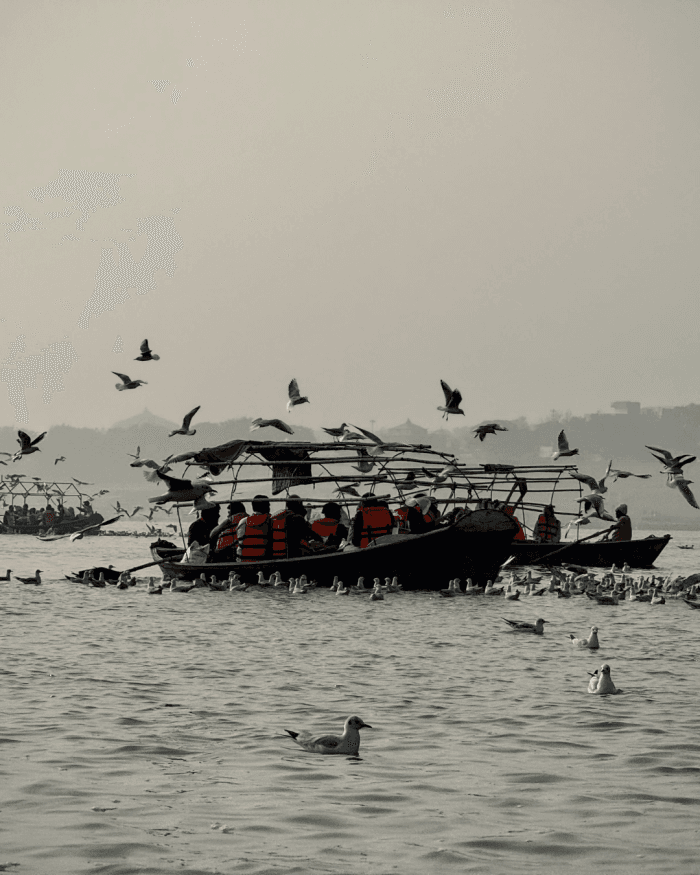 2Nights / 3 Days
 The Varanasi–Prayagraj tour offers a deeply spiritual experience across two of India’s holiest cities. The journey begins in Varanasi with darshan at Kashi Vishwanath Temple, a peaceful sunrise boat ride on the Ganga, and the grand evening Ganga Aarti, followed by a visit to the sacred ghats. The tour then continues to Prayagraj for a holy dip at the Triveni Sangam and darshan at Hanuman Mandir, making it a short yet meaningful pilgrimage filled with devotion and spiritual calm.
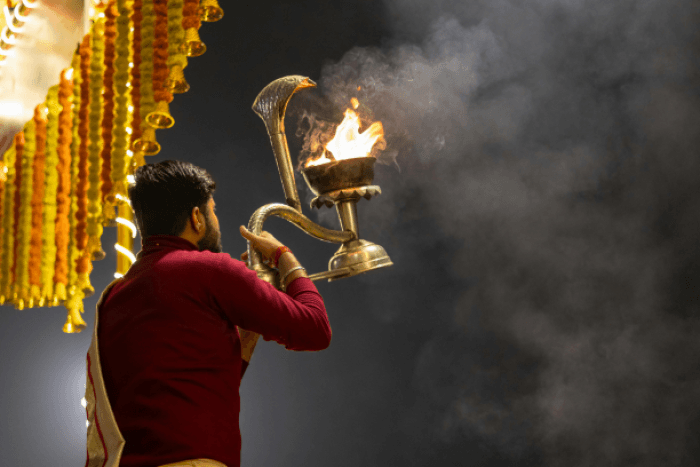 3 Nights / 4 Days
The Kashi–Prayagraj–Ayodhya tour is a spiritually enriching journey covering three of India’s most sacred cities associated with Lord Shiva, the holy confluence of rivers, and Lord Ram. Beginning in Varanasi with temple darshan, a peaceful Ganga boat ride, and the grand Ganga Aarti, the journey continues to Prayagraj for a holy dip at Triveni Sangam and darshan at Hanuman Mandir, and concludes in Ayodhya with darshan at Shri Ram Janmabhoomi and the serene Saryu Aarti, offering a complete and meaningful pilgrimage experience.