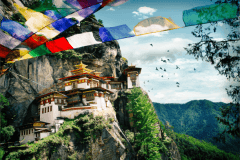
Punakha
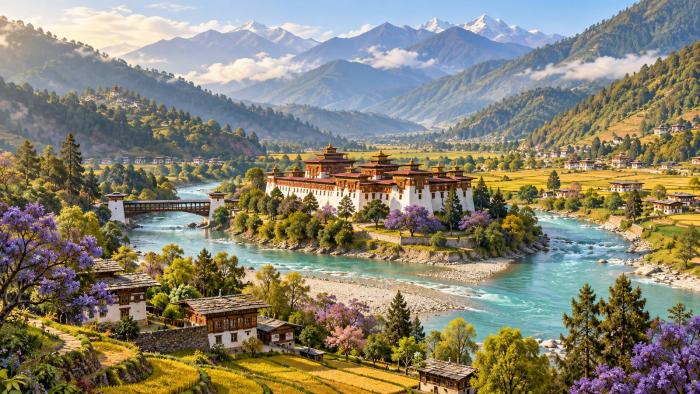

Punakha offers a different setting from the capital: a valley shaped by rivers, open landscapes and a fortress-monastery that remains central to its identity. The main reason to visit is Punakha Dzong, whose position at the confluence of the Pho Chhu and Mo Chhu brings together scenery, architecture and religious heritage in one place. Punakha was Bhutan’s former capital before the seat of government moved to Thimphu. This historical role helps explain why its dzong is more than an attractive building. It remains connected with the country’s religious life, and a guided visit gives context to its courtyards, structural details and permitted sacred spaces. Approach it as a living institution, with access governed by local arrangements. The surrounding valley also rewards a slower visit. Look beyond the principal monument to notice the riverbanks, settlement patterns and agricultural landscape. Some travellers use Punakha as a base for additional temples, walks or river activities. Those experiences require separate planning and are not automatically included whenever a package mentions the town. Punakha is commonly reached from Thimphu across Dochula Pass. Allow time for the mountain road and for the stop at the pass, rather than planning the day only around the distance between towns. An overnight stay can help separate the journey from the return transfer and allow sightseeing to adapt to local opening times. The final programme should identify the attractions actually included, the walking involved and any additional charges.